Multi-scale Spatial Omics Platform
The goal of the Multi-scale Spatial Omics Platform is to make spatial omics approaches more accessible to our UMC Utrecht researchers and beyond. To achieve this, we offer tailored support and guidance to enhance your research with our spatial technologies and strive to nurture a spatial community within UMC Utrecht. We also offer consulting and services to external users.
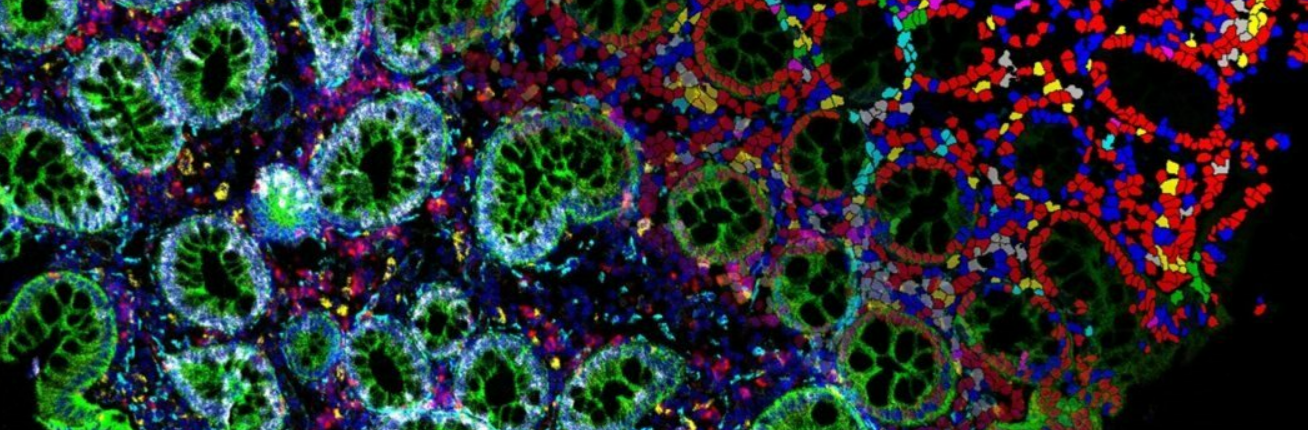
Spatial omics has taken off in recent years, helping us understand intercellular relationships by mapping the organization of cells within tissues.
Collecting detailed cellular information
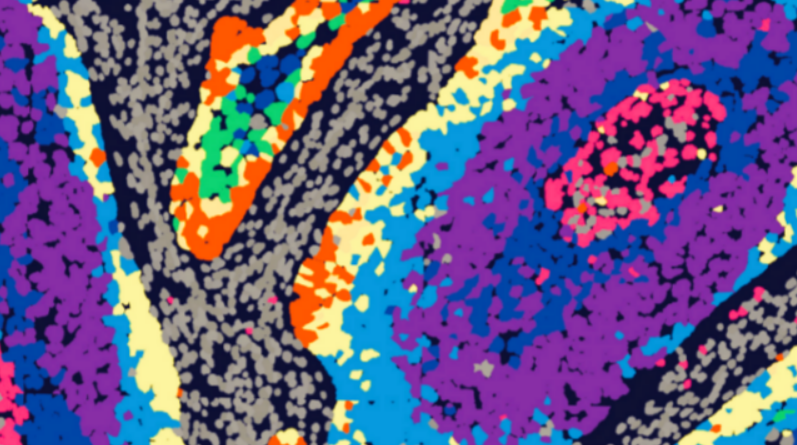
With spatial techniques, we collect detailed cellular information and study the positional context of cells within tissues. Leveraging these technologies for your research allows you to better understand biological processes, such as cell-to-cell interactions between normal and diseased tissue. Within our team, we share the ambition to unravel disease drivers through in-depth studies of intercellular relationships with in patient tissues.
Catalyze the application of spatial technologies
The Multi-Scale Spatial Omics Platform is set up to catalyze the application of spatial technologies by merging expertise and providing support for spatial data collection and analysis. UMC Utrecht hosts several state-of-the-art spatial methodologies (including transcriptomics, proteomics and metabolomics), and we offer advice and solutions tailored to your scientific questions and research goals.
Collaborate with UMCU core facilities
Working closely with UMC Utrecht core facilities, we strengthen and advance the acquisition and analysis of high-spatial-resolution data. Several spatial technologies are already provided in service, including:
– Cell Microscopy Core: immunofluorescence, (immuno)electron microscopy
– UCyTOF: high-flex in situ single-cell imaging
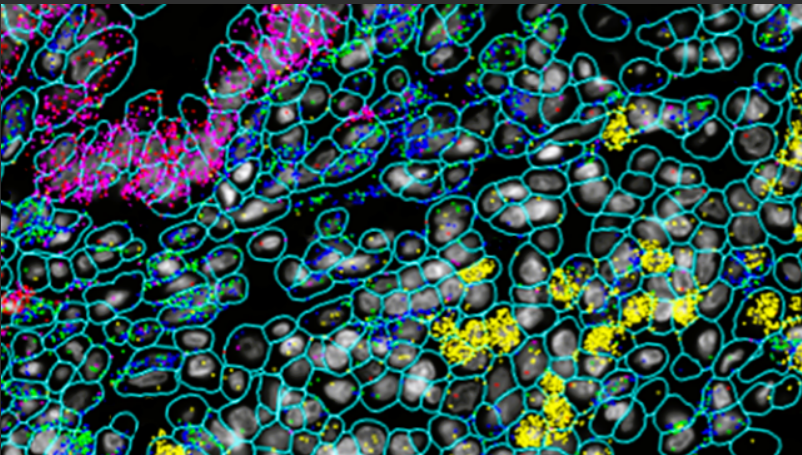
– USeq: spatial transcriptomics and proteomics
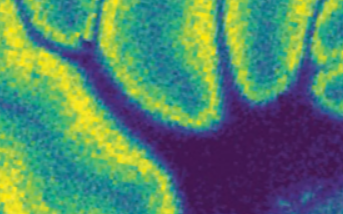
– Utrecht MSI facility: in situ imaging of biomolecules such as peptides, lipids and metabolites.
These technologies enable us to study the expression and localization of mRNA, proteins, lipids and metabolites within their spatial tissue context. Unlocking tissue complexity with spatial omics provides greater insight into disease-promoting pathways and ultimately into new strategies to prevent or treat disease.
Let’s connect!
General InquiriesKristof Van Avondtk.vanavondt@umcutrecht.nl+31 88 7553823 Visiting address:Universiteitsweg 1003584 CG Utrecht
Facility features:
- State-of-the-art spatial omics technologies, including transcriptomics, proteomics and metabolomics
- High-resolution mapping of mRNA, proteins, lipids and metabolites within tissue context
- Tailored support for spatial data collection, analysis and interpretation through UMC Utrecht core facilities