Exposome-Scan
A joint Leiden–Utrecht University infrastructure using high-resolution mass spectrometry (LC-HRMS, GC-MS) to simultaneously measure thousands of chemicals — pesticides, pollutants, metabolites, pharmaceuticals — in blood, urine, and hair. It enables agnostic, hypothesis-free exposure profiling in large population cohorts, linking complex chemical mixtures to health outcomes and pharmaco-exposomics applications.
The Exposome Scan Facility
Background
Human health is shaped not by single exposures but by the totality of chemical, biological, and lifestyle factors encountered across a lifetime — the exposome. Traditional health studies have approached this complexity one chemical at a time, a strategy that is inherently incomplete and poorly suited to capturing the mixture effects, interactions, and cumulative burden that characterise real-world exposure. The Exposome Scan was established to address this gap: to measure the human chemical environment comprehensively, simultaneously, and at population scale.
About the Facility
The Exposome Scan is a collaborative research infrastructure between Leiden University (Leiden Academic Centre for Drug Research / LACDR) and Utrecht University (Institute for Risk Assessment Sciences / IRAS), designed to enable high-throughput, untargeted measurement of the human exposome in biological matrices. By combining world-class analytical chemistry with epidemiological expertise, the facility bridges the distance between a biological sample and a meaningful health insight.
What It Measures
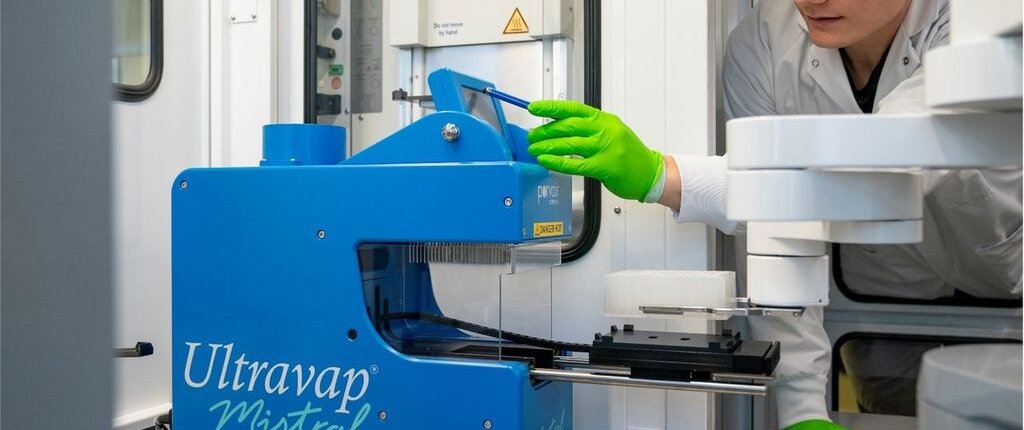
The facility applies advanced mass spectrometry — primarily high-resolution liquid chromatography–mass spectrometry (LC-HRMS) and gas chromatography–mass spectrometry (GC-MS) — to biological matrices including blood (serum and plasma), urine, and tissue. The goal is to capture as wide a chemical “fingerprint” as possible in a single sample: endogenous metabolites, environmental contaminants (pesticides, persistent organic pollutants, plasticisers, flame retardants, polycyclic aromatic hydrocarbons), pharmaceuticals, and dietary components simultaneously, rather than measuring targeted compounds one by one. Different scans have been developed to target at different depth both exogenuous and endogenuous compounds. Additional, technologies allow for sensitive measurements by for example conctrating with in-line evaporators.
In a single analytical run, the platform can detect and semi-quantify thousands of chemical features across a dynamic concentration range spanning several orders of magnitude. Spectral data are annotated against curated reference libraries and continuously updated as new compounds are characterised, ensuring that the facility’s coverage grows over time. Where full identification is not yet possible, unknown features can be retained and revisited as databases expand — meaning that no signal is discarded prematurely.
Division of Expertise
Leiden brings deep analytical chemistry strength — method development, instrument operation, quality control, and spectral library annotation. The Exposome-Scan facility is hosted by the Dutch Metabolomics Center. Utrecht contributes epidemiological study design, exposure science, and the statistical frameworks needed to link complex multi-exposure profiles to health outcomes in large cohorts. Together this covers the full pipeline: from biobank sample preparation and extraction, through high-throughput mass spectrometric acquisition, to feature detection, annotation, mixture analysis, and biological interpretation. This integrated pipeline reduces the risk of losing signal between analytical and epidemiological stages, which has historically been one of the main bottlenecks in exposome research.
Why It Matters Scientifically
The Exposome Scan approach allows researchers to work in an agnostic, hypothesis-generating mode — identifying which of thousands of detected features associate with a disease outcome — before drilling down into specific compounds for targeted follow-up. This is particularly relevant for diseases where multiple environmental contributors are suspected but no single agent fully explains the observed patterns, such as neurodegenerative diseases, cardiovascular conditions, metabolic disorders, and adverse reproductive and developmental outcomes.
Beyond environmental epidemiology, the facility supports pharmaco-exposomics applications — examining how ph
Let’s connect!
General InquiriesRoel Vermeulenexposome.office@uu.nl Visiting address:Institute for Risk Assessment // Einsteinweg 552333 CC Leiden
Facility features:
- Global untargeted metabolomics using RPLC and HILIC-qTOFMS, covering more than 2,500 small molecules, including metabolites, lipids, peptides and exposure markers.
- Untargeted screening of semi-volatile environmental chemicals with GC-Orbitrap, including pesticides, flame retardants and PCBs.
- Dedicated lipidomics and bioactive lipid assays, covering more than 1,500 lipids and over 300 signalling lipids linked to inflammation and immune responses.
- Targeted and tracer-based metabolomics for specific metabolite classes, including CoA esters, acylcarnitines, bile acids and isotope-labelled metabolites.